Persistent toothache
Pain may be spontaneous, worsen on biting or continue after hot or cold stimulation.

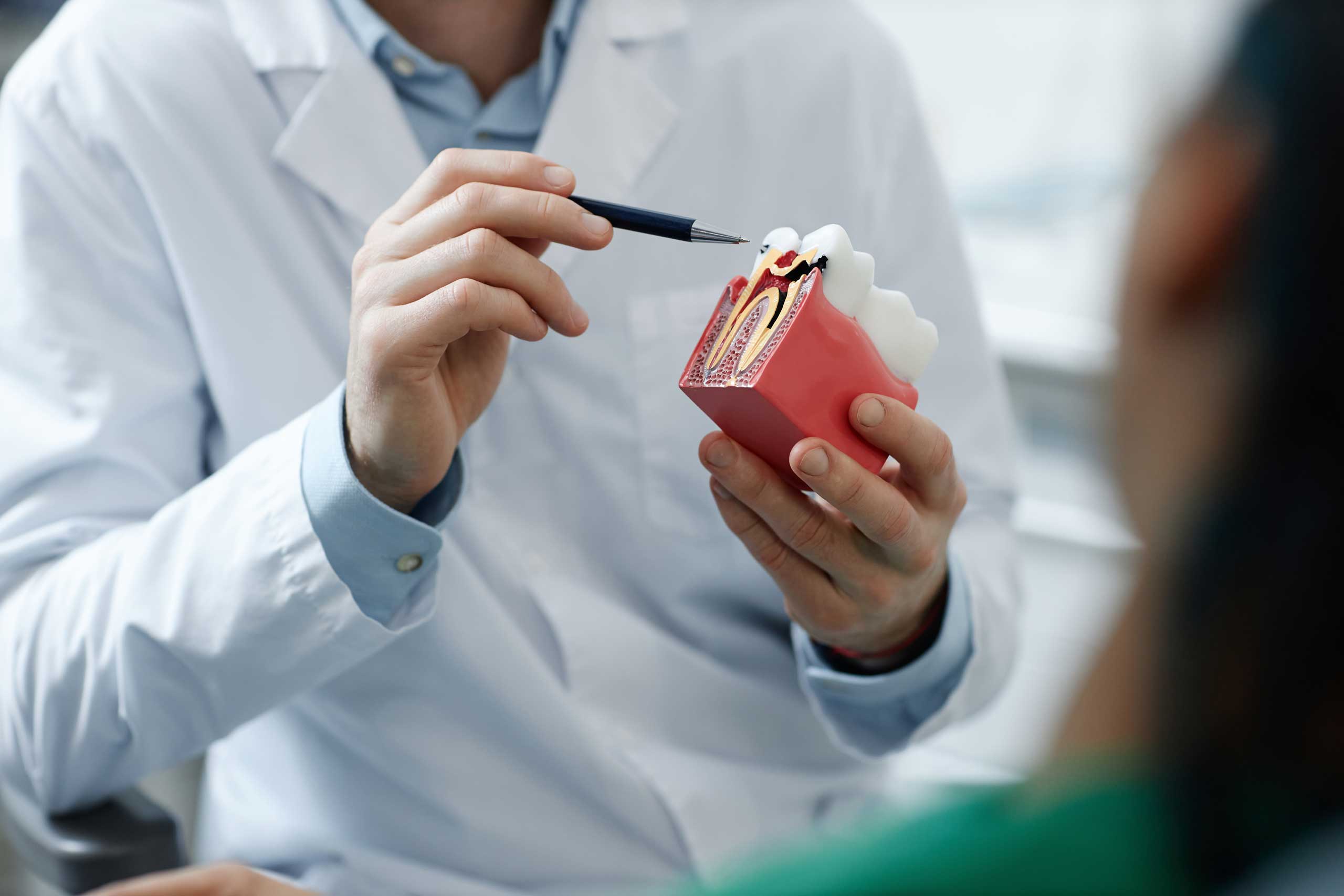
Root canal treatment removes infected or damaged pulp from inside a tooth, then cleans, shapes and seals the root canal system to help retain the natural tooth.
A deep cavity, crack or injury can allow the tissue inside a tooth to become inflamed or infected. Root canal treatment addresses the internal infection; the tooth then needs an appropriate restoration to protect function.
Antibiotics may be used for particular spreading infections, but they do not remove infected pulp from inside the root canal system. Definitive treatment generally involves root canal care or removal of the tooth, depending on restorability and individual circumstances.
Pain may be spontaneous, worsen on biting or continue after hot or cold stimulation.
Local swelling, a draining spot or a bad taste may indicate infection around a tooth.
Trauma can damage the pulp even when the outside of the tooth appears mostly intact.
Bacteria can reach the pulp through extensive decay, a fracture or repeated dental work.
Treatment recommendations depend on the findings, your health history and your preferences.
Examine symptoms, tooth structure and X-rays to determine whether root canal treatment is suitable.
Under local anaesthetic, access the tooth and clean, shape and medicate the canal system as required.
Fill the canals, then place a suitable filling or crown to protect the remaining tooth structure.
| Option | Primary goal | Important consideration |
|---|---|---|
| Root canal treatment | Retain the natural tooth | May require several visits and a protective crown |
| Tooth extraction | Remove the infected or unrestorable tooth | Leaves a space and may lead to replacement planning |
| No treatment | Delay intervention | Infection may worsen and urgent symptoms can develop |
| Specialist referral | Manage complex anatomy or diagnosis | An endodontist provides advanced root canal care |
This page provides general information. A dentist needs to assess your mouth before recommending treatment. Risks, benefits, alternatives and likely costs vary.
Root canal treatment removes infected or damaged pulp, cleans and seals the canals inside a tooth, and helps retain the tooth when it is otherwise suitable to restore.
Local anaesthetic is used during treatment. The tooth may feel tender afterwards, but this should be monitored and usually improves as healing progresses.
Some teeth can be treated in one visit, while others require several. The number depends on infection, anatomy, symptoms and the restorative plan.
Back teeth and teeth with substantial structure loss often need a crown or other protective restoration. Your dentist will assess the remaining tooth.
Antibiotics do not remove infection from inside the root canal system. They may be prescribed for specific spreading infections alongside definitive dental treatment.
Extraction may be recommended if the tooth is severely fractured, lacks sufficient support or cannot be predictably restored. Replacement options can then be discussed.
Arrange an assessment to discuss the concern, available options and likely fees.