Morning jaw fatigue
Tightness, temple discomfort or tired jaw muscles may be noticed on waking.

Teeth grinding, or bruxism, is clenching or grinding outside normal chewing and may contribute to tooth wear, fractures, sensitivity, jaw discomfort, headaches or damaged restorations.
Some people grind while asleep and discover it after a partner notices the sound or a dentist sees patterns of wear. Treatment depends on the signs, symptoms and possible contributing factors.
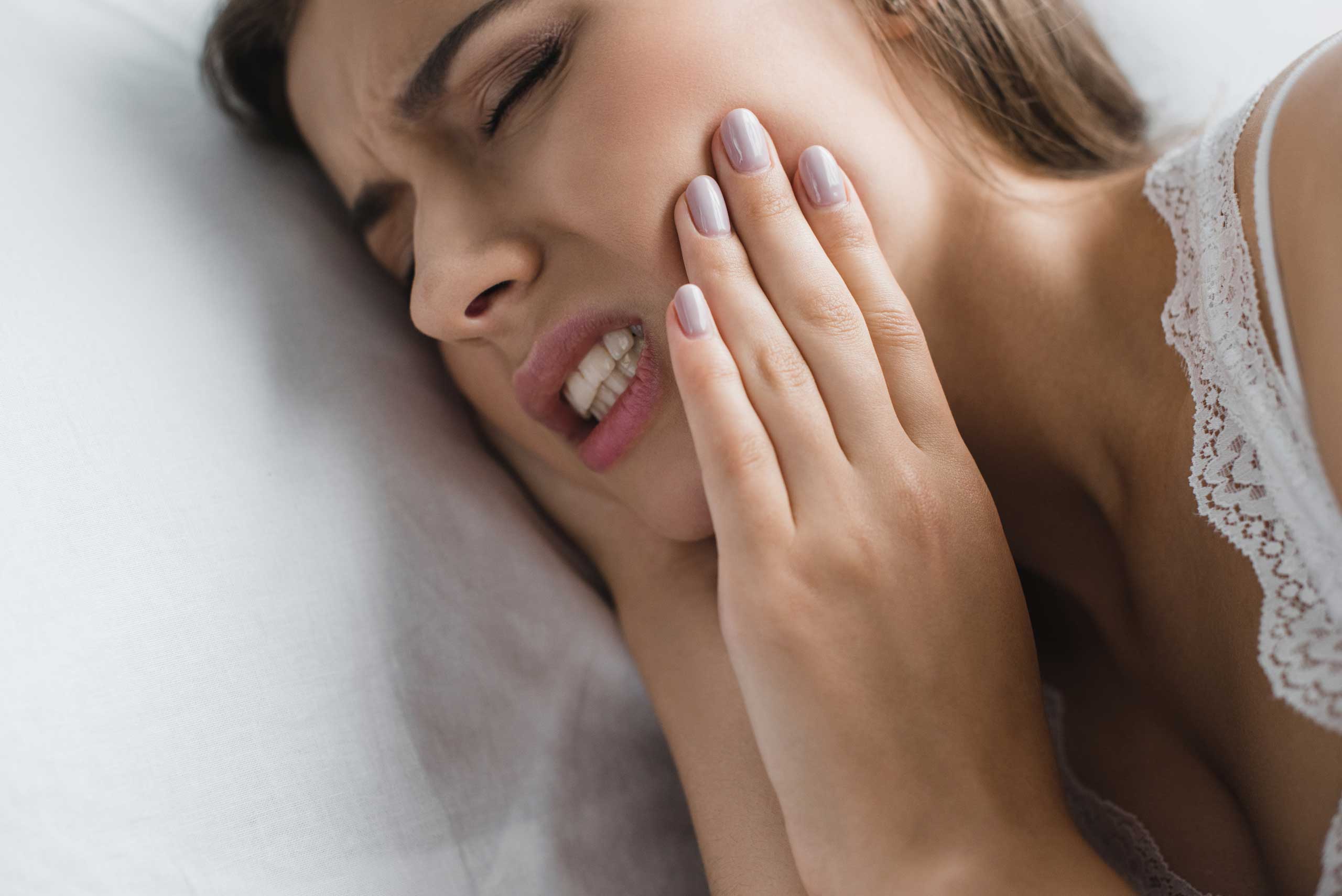
Wear, cracks, broken fillings and morning jaw stiffness may develop gradually. A dentist can assess whether the pattern is consistent with grinding, check for other causes and discuss whether protection, repair or medical referral should be considered.
Tightness, temple discomfort or tired jaw muscles may be noticed on waking.
Flattened edges, small fractures, sensitivity or repeated restoration damage can be signs.
A partner may hear grinding even when the person is unaware of it.
Sleep bruxism can occur alongside snoring or obstructive sleep apnoea and may warrant medical assessment.
Treatment recommendations depend on the findings, your health history and your preferences.
Review symptoms, tooth wear, restorations, jaw muscles, bite and relevant lifestyle or medication factors.
Determine whether the immediate need is monitoring, protecting teeth, managing discomfort or repairing damage.
Discuss a custom splint where appropriate and referral to a GP, sleep physician or other clinician when indicated.
| Option | Purpose | Limitation |
|---|---|---|
| Monitoring | Track stable wear without unnecessary treatment | Requires review if symptoms or damage change |
| Custom occlusal splint | Protect teeth and reduce load on muscles and joints | Does not necessarily stop the grinding habit |
| Repair damaged teeth | Restore function or protect weakened structure | Underlying grinding still needs consideration |
| Medical or sleep referral | Investigate associated health or sleep factors | Recommended only when relevant signs are present |
This page provides general information. A dentist needs to assess your mouth before recommending treatment. Risks, benefits, alternatives and likely costs vary.
Possible signs include tooth wear, chipped teeth, morning jaw stiffness, headaches, sensitivity or grinding sounds noticed by a partner. A dental assessment can look for supporting evidence.
A custom splint is mainly intended to protect teeth and may reduce muscle or joint symptoms. It does not necessarily stop the grinding activity itself.
No. An occlusal splint is a hard, custom-made appliance designed for tooth grinding. A sports mouthguard has a different material, design and purpose.
Stress and anxiety can be associated with bruxism, but other factors may contribute, including alcohol, smoking, caffeine, some medicines and sleep disorders.
Ongoing heavy forces may contribute to tooth wear, fractures and damaged restorations. The degree of risk varies and should be assessed clinically.
Sleep bruxism can be associated with obstructive sleep apnoea. If your history suggests a sleep concern, the dentist may recommend assessment by a GP or sleep physician.
Arrange an assessment to discuss the concern, available options and likely fees.